

Table of Contents
- What Curated Boutique Fashion for Modern Women Actually Means
- How to Assess Clothing Quality Before You Buy
- Best Anthropologie Alternatives for Dresses in 2026
- Ethical Women's Clothing Brands: How to Spot Real Evidence
- Pricing Breakdown: What Curated Boutique Pieces Cost
- Sizing, Fit, and Returns: What to Know Before Ordering
- Building a Versatile Wardrobe from Curated Boutique Pieces
- Frequently Asked Questions
Last Updated: October 16, 2026
What Curated Boutique Fashion for Modern Women Actually Means
Curated boutique fashion for modern women is a hand-selected edit built around a clear point of view, not a warehouse of every trend.
A department store buys breadth; a boutique buys judgment. When someone has filtered the racks, the question shifts from "what exists?" to "what is worth owning?"
This guide covers judging quality before you buy, reading ethical claims skeptically, what curated pieces cost, and building a wardrobe that works from a corporate week to a Saturday dinner.
How to Assess Clothing Quality Before You Buy
Quality assessment comes down to three things you can check in under two minutes: fabric content, stitch density, and hardware weight.
Start with fabric. Natural fibers like cotton, wool, silk, and leather hold shape and age better than high synthetic blends, though a little elastane adds useful stretch.
Then check construction: even, tight stitching, flat seams, and pattern matching at the side seams. A dress hem should hang level when laid flat.
Fabric, Stitching, and Hardware: What to Check
Hardware is the fastest tell. Zippers should glide without catching, buttons should feel solid, and clasps should close with a definite click. Tinny hardware on an expensive piece signals cost-cutting elsewhere.
For shoes, examine the heel attachment and insole. A cushioned leather insole, like the one in our First Bloom Mary Jane Flat, shows the maker thought about wear, not just appearance.

Best Anthropologie Alternatives for Dresses in 2026
The best alternative to a large lifestyle retailer is a smaller boutique with a tighter, more deliberate edit: fewer pieces, stronger ones.
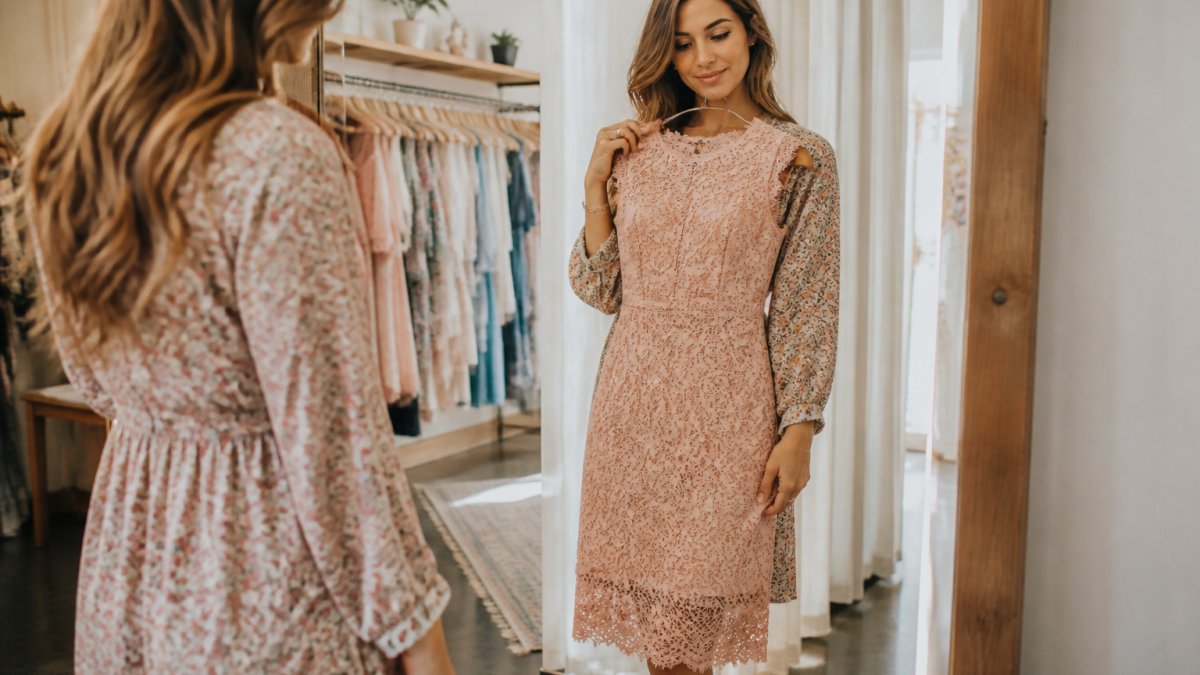
What separates a good alternative from a cheap imitation is curation logic. Some boutiques chase volume with fast turnarounds and synthetic fabrics.
Our approach sits in the second camp. The Lace Homecoming Dress, a strapless pink lace A-line cocktail piece curated for our New York Fashion Week presentation, exists as a single size 4.
When comparing boutiques, ask three questions:
- Does the retailer disclose whether a piece is designed in-house or curated from another maker?
- Is the size range stated clearly, including whether an item is one-of-one?
- Are fabric contents listed on the product page, not just in marketing copy?
A boutique that answers all three tells you how it operates; one that avoids them tells you something too.
Ethical Women's Clothing Brands: How to Spot Real Evidence
Real ethical evidence is specific: named materials, stated production methods, disclosed quantities, and honest labeling of what a brand does and does not make itself. Vague "conscious" or "responsible" sourcing language is positioning, not evidence.
The most useful test is whether a brand will tell you what it does not control. A boutique curating pieces from other designers should say so plainly, and ours does: each runway listing states curated pieces are selected by us, not designed or manufactured by us.
Look for these signals when evaluating any ethical claim:
- Specificity over sentiment. "Small-batch production" means something. "Ethically made" alone does not.
- Durability as a sustainability argument. A piece you wear for five years has a lower cost per wear than a cheap one you replace twice a year.
- No certification theater. Certifications matter when named and verifiable. A logo without a body behind it means nothing.
Pricing Breakdown: What Curated Boutique Pieces Cost
Curated boutique pricing reflects smaller production runs, better materials, and the cost of holding limited inventory. You pay for selection and construction, not volume, so a well-made dress or pair of shoes sits above fast fashion and often below heritage luxury.
Most shoppers compare sticker prices and stop. The number that predicts value is total cost of ownership: purchase price plus shipping and any return or exchange cost, divided by realistic wears.
A Four-Number Scorecard for Any Boutique
Before you buy from any boutique, write down these four numbers for the specific item you want:
- Item price, the listed price, including any size-based upcharge.
- Shipping cost, and the free-shipping threshold, if one exists.
- Return cost, is the return free, flat-fee, or deducted from the refund? Are exchanges free?
- Realistic wears per year, how often will you actually wear this in your climate and schedule?
Divide the first three (total outlay) by the fourth for your year-one cost per wear. Repeat for year two assuming no new purchase. The piece that looks expensive at checkout often wins by year two.
Typical Price Bands in Curated Boutique Fashion
Across the boutique segment, a common pattern is roughly three bands:
- Entry (under $200): everyday flats, simple tops, casual dresses. Good for testing a new boutique's fit and quality before committing more.
- Mid ($200-$400): occasionwear, heeled footwear, structured knitwear. This is where construction and materials start to visibly separate boutiques from fast fashion.
- Signature ($400+): leather outerwear, boots, statement pieces. Justified by materials and longevity, not trend.
These bands are a starting frame, not a rule. What matters is whether the price is explained by materials and construction you can verify on the product page.
What Our Edit Looks Like
| Piece | Price | Category | Best For |
|---|---|---|---|
| The First Bloom Mary Jane Flat | $195 | Everyday footwear | Office days, brunch, travel |
| Lace Homecoming Dress | $199.99 | Occasionwear | Cocktail events, weddings |
| The Strawberry Bloom Slingback | $225 | Heeled footwear | Weddings, dinners, vacations |
| The Strawberry Blossom Mary Jane Heel | $325 | Signature footwear | Statement looks, evenings out |
| The Bloom Boot | $425 | Seasonal outerwear | Cooler months, day-to-night |
The spread is deliberate: entry at $195 for an everyday flat, ceiling at $425 for a leather boot with floral embroidery, so you can test a boutique's quality before investing in a signature piece.
The Strawberry Blossom Mary Jane Heel →
The Hidden Costs That Change the Verdict
Two overlooked costs often decide whether a boutique is worth it:
- Return shipping. A $12 return label on a $200 dress you send back once is a 6% surcharge on the transaction. A boutique with free returns is effectively cheaper on the same item if you are unsure of fit.
- Exchange friction. If exchanges are free but returns are not, the boutique is signaling it wants you to stay in the relationship. That is usually a good sign for fit consistency.
Cost per wear is the number that matters. A $325 heel worn twice a week for two years costs far less per outing than a $90 pair that falls apart in a season. That favors construction over sticker price and argues for buying fewer, better pieces.
Sizing, Fit, and Returns: What to Know Before Ordering
Fit is the biggest reason online fashion purchases get returned, and most of it is preventable: measure against the brand's own chart, and read the size range on the specific listing rather than the site-wide guide.
Size Range Is a Signal, Not Just a Spec
When comparing boutiques, look at the size range each actually stocks. A narrow range says something about its customer and buying; a wider range, including extended sizes on core pieces, usually means more investment in fit development, since grading a pattern across more sizes costs more.
Ask three questions of any boutique's sizing page:
- Does the size chart change by category (footwear vs. apparel vs. outerwear), or is it one generic table?
- Are measurements given as garment measurements (flat-lay) or body measurements? The two are not interchangeable.
- Is the model's height and size stated, and is the fit described as true-to-size, runs small, or runs large?
A boutique that answers all three prevents returns; one that does not is asking you to guess.
Fit Notes by Category
For footwear, width matters as much as length: a pointed toe and a rounded toe fit the same size differently. Our slingback uses a sleek pointed toe with a 2.5-inch kitten heel; the Mary Jane flat uses a softly rounded toe.

For apparel, check whether an item is standard sizing or a one-off. The lace cocktail dress in our edit is a single size 4, so there is no size range, only a fit question.
For knitwear and outerwear, look for shoulder and sleeve length in the chart. These are the two measurements that most often make a piece feel wrong even when the chest and waist fit.
Comparing Return and Exchange Policies
Return policy is where boutiques differ most and the easiest thing to compare before buying. Read for five items:
- Return window. 14 days is common in boutique; 30 days is generous. Count from delivery, not order date.
- Condition requirements. Tags attached, unworn, original packaging. One-off pieces are often final sale.
- Return shipping cost. Free, flat-fee, or deducted from refund.
A boutique that publishes all five in plain language is easier to buy from confidently than one that buries them in a FAQ.
A Pre-Order Checklist
Before you order anywhere, confirm:
- The brand lists fabric content on the product page
- The size chart is specific to that item, not generic
- The return window and condition requirements are stated in plain language
Building a Versatile Wardrobe from Curated Boutique Pieces
A versatile wardrobe from a boutique starts with three anchors: one everyday shoe, one occasion piece, and one seasonal statement.
The everyday anchor handles the most hours.
The occasion anchor covers events you see coming: weddings, dinners, presentations.
The statement anchor is what you reach for when you want to be noticed: a heel with a rose-gold emblem, or a boot with floral embroidery and a signature charm. Our Bloom Boot was designed around that idea: confidence can be soft.

For readers who want to go further, the Strawberry Blossom Mary Jane Heel is the piece that ties the whole approach together, a vintage-inspired silhouette with a 3-inch heel and a floral insole.
Notice what this avoids: it does not ask for a whole new wardrobe, just three things bought well, with the rest of your closet doing its job.
Curated boutique fashion rewards shoppers who slow down and check the details: fiber content, stitching, honest labeling, and cost per wear. Our signature footwear and hand-selected NYFW runway edit are built for women who want pieces as considered as they look.
Frequently Asked Questions
What should you look for when comparing boutique clothing brands?
Compare five things side by side: fabric composition and weight, construction details like seam finishing and hardware, the full size range offered, the return policy window, and whether the brand publishes transparent information about where pieces are made. Curated boutique fashion for modern women often means limited runs, so check whether a piece is designed in-house or curated from another maker.
How can you tell whether a fashion brand is ethical?
Look for specifics rather than slogans. Ethical women's clothing brands state materials clearly and explain what small-batch production means for their supply chain. Vague claims like 'consciously made' without detail are a warning sign. If a brand curates pieces from other designers, it should say so plainly, which is a mark of honesty rather than a flaw.
What are the best alternatives to Anthropologie dresses?
The best alternatives are boutiques that offer a similar romantic, feminine aesthetic but with clearer sourcing and smaller production runs. Look for curated edits that include occasionwear like lace cocktail dresses, plus everyday pieces that work across seasons. A dress like the Lace Homecoming Dress in pink lace and an A-line silhouette shows how a curated piece can deliver the same statement-making feel, often at a lower price point than larger retailers charge for comparable styles.
How do you build a versatile wardrobe from boutique pieces?
Start with a small core of neutral, well-made staples, then add one or two statement pieces per season. A blush leather flat or a Mary Jane heel in a soft shade can move between office days, brunch, and evening events, which stretches each purchase further. Pair a lace dress with a structured blazer for work, then swap to delicate jewelry for a wedding. Track cost per wear rather than sticker price to judge real value.