

Table of Contents
- Step 1: Measure Your Foot Width and Length at Home
- Step 2: Understand Width Sizing Systems and Brand Variation
- How Heels Should Fit Across the Toe Box, Instep, and Heel
- Best Heel Shapes for Wide Feet
- Comfortable Heels for Wide Feet: What to Look For
- Step 3: Safe Ways to Break In or Adjust Your Heels
- Warning Signs of Poor Fit and When to Return
- Your Online Shopping Checklist for Wide-Fit Heels
- Frequently Asked Questions
Last Updated: October 10, 2026
Finding heels that fit wide feet is one of the most common challenges for women who love statement footwear but struggle with comfort. At Strawberry Flowers, we understand that how to find heels that fit wide feet requires more than just guessing at a larger size, it demands a strategic approach to measuring, understanding sizing systems, and knowing which heel shapes work best for your foot structure. Below, we'll show you exactly how to find heels that fit wide feet, from measuring at home to spotting warning signs of poor fit.
Step 1: Measure Your Foot Width and Length at Home
The foundation of finding heels that fit wide feet starts with precise measurement. You cannot shop confidently without knowing your actual dimensions.
Grab a ruler, a piece of paper, and a pen. Place your foot on the paper while wearing the socks you'd normally wear with heels. Draw a line at your heel and another at your longest toe. Measure the distance, that's your length. Next, measure across the widest part of your foot (usually near your ball). Write both numbers down.
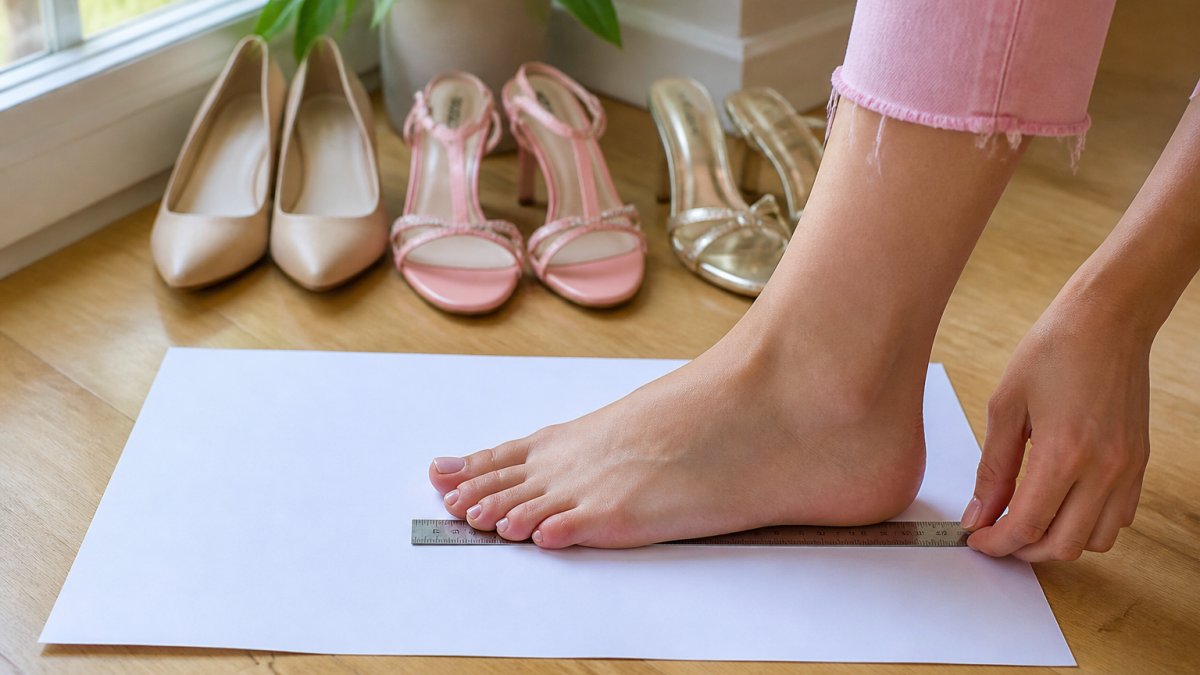
Width matters more than most guides admit. A shoe that fits your length perfectly but pinches your width will hurt within an hour. Many women skip this step and end up returning heels repeatedly. Don't be that shopper.
Compare your measurements to standard sizing charts. Most US women's shoes use letter designations (A, B, C, D, E, EE, EEE) where B is considered "standard" width. If your width measurement falls into the D, E, or EE range, you need wide-fit or wide-width heels specifically.
Step 2: Understand Width Sizing Systems and Brand Variation
Here's what most guides get wrong: width sizing is not standardized across brands. One designer's "wide" is another's "standard."
Some brands use letter widths (B, C, D, E, EE). Others use centimeters or millimeters. A few luxury houses don't offer width options at all, they assume one fit works for everyone, which explains why their heels end up in return bins.
Research from footwear fit studies in consumer retail shows that brand-to-brand variation in width measurements can differ by up to half a size. This means a D-width pump from one maker might feel tighter or looser than a D-width from another.
Before you buy, check the brand's specific width chart. Look for these indicators:
- Does the brand offer half-sizes in width (like D and D+)?
- Do they provide centimeter measurements for width?
- Are customer reviews consistent about fit across sizes?
- Does the brand's website show width options clearly, or do you have to dig?
Strawberry Flowers curates footwear with fit in mind. Our hand-selected runway edit includes pieces designed for diverse foot shapes.
How Heels Should Fit Across the Toe Box, Instep, and Heel
Proper fit for heels that fit wide feet means comfort in three specific zones. Miss one, and the shoe fails.
The toe box is where your toes have room to breathe. Press gently on the top of the shoe. You should feel about a thumb's width of space between your longest toe and the end of the shoe.
The instep (the arch area) should feel snug but not restrictive. Slip your finger between the shoe and your foot at the arch. You should fit one finger comfortably, not two, not zero.
The heel should grip without cutting off circulation. Your heel should not slip when you walk, but it also shouldn't feel like a vice. A half-inch of movement is normal and acceptable.
Press down on the heel counter (the back of the shoe). It should feel firm and supportive, not flimsy. A weak heel counter is a common reason women abandon heels after one wearing, your foot rolls inward with each step, straining your ankle and calf.
Many women with wide feet make this mistake: they buy a larger overall size to get width, then end up with heels that are too long. Your heel slips, your toes jam into the toe box, and nothing works.
Best Heel Shapes for Wide Feet
Not all heel shapes work equally well for wide feet. Some are forgiving. Others amplify discomfort.
Block Heels and Wedges
Block heels and wedges are the most forgiving option for wide feet. The wider base distributes pressure evenly across your foot, reducing strain on the ball of your foot and toes.
A block heel maintains consistent width from toe to heel. Wedges taper slightly but still offer more stability than thin heels. Both styles allow you to wear heels for extended periods without pain.
Block heels work best for professional environments and casual outings. They pair well with trousers, midi skirts, and dresses. If you're new to heels or returning after time away, start here. Your feet will thank you.
Kitten Heels and Low Heels
Kitten heels and low heels offer a middle ground. They provide height and elegance without the pressure of higher heels.
Low heels reduce the angle of your foot, which decreases tension on the ball of your foot, a critical advantage for wide feet.
Kitten heels work especially well for office settings and formal events where you want polish without the physical toll of higher heels.
Closed-Toe Pumps and Ankle Boots
Closed-toe pumps offer structure that keeps your foot stable inside the shoe. The enclosed design prevents your foot from shifting, which is crucial for wide feet that need containment.
Ankle boots with wide-fit options provide additional support at the ankle and calf. The boot shaft prevents your foot from rolling, improving stability on uneven surfaces.
Look for pumps and boots with:
- A rounded or almond toe box (not pointed)
- Reinforced side seams
- A padded collar at the ankle
- Arch support built into the insole
Pointed-toe pumps and boots force your toes into an unnatural angle and create pressure points that lead to bunions and pain.
Comfortable Heels for Wide Feet: What to Look For
Comfort in heels is not an accident. It's the result of specific design choices.
When shopping for comfortable heels for wide feet, prioritize these features:
- Cushioned insoles: Look for memory foam, gel inserts, or padded footbeds. These absorb impact and reduce pressure on your ball of foot.
- Breathable materials: Leather stretches and molds to your foot. Synthetic materials often don't. Mesh panels improve airflow.
- Flexible soles: The shoe should bend at the ball of your foot, not stay rigid. Flex the sole with your hands before buying.
- Wide toe box: There should be visible space around your toes, not a tapered point.
- Adjustable straps or laces: These let you customize the fit around your instep and ankle.
Strawberry Flowers' signature footwear collection emphasizes comfort alongside elegance. Our designs balance romantic femininity with practical support.
Step 3: Safe Ways to Break In or Adjust Your Heels
New heels almost always need a break-in period. This is normal, not a sign of poor fit.
Wear your heels for 30 minutes at a time around your home for the first week. This lets the materials soften and mold to your foot without the added stress of being out in public. Your foot and the shoe are getting to know each other.
Use a shoe stretcher overnight. A wooden stretcher with a width-expansion knob can gently widen the shoe. Insert it after wearing the shoes, and leave it in overnight. Repeat this 3-4 times over two weeks.
Apply a leather conditioner to the interior if the shoe is leather. This softens the material and speeds up molding.
Gel inserts and cushioning pads are your friends. Stick a gel pad under the ball of your foot if that area feels pressure. Add a thin cushion to the heel if it slips.
Never force a shoe that causes sharp pain. Pain in the toe box, heel, or arch during break-in suggests the shoe is genuinely too narrow or too small. This is different from mild discomfort as materials soften. Return the shoe if pain persists after one full week of wear.
Warning Signs of Poor Fit and When to Return
Some discomfort signals that a shoe will never work, no matter how long you break it in.
Red flags that mean return the heels:
- Your toes are visibly bunched or overlapping inside the shoe
- The heel slips more than half an inch when you walk
- You feel sharp pain (not just pressure) in your toes, ball of foot, or arch after 15 minutes of wear
- The toe box is so tight that your toenails turn white or pale after wearing
- Your foot goes numb in any area after an hour of wear
- Blisters form in the same spot every time you wear them, even after a week of break-in
These are signs the shoe is genuinely too narrow, too small, or poorly designed for your foot shape. Continuing to wear them risks foot injuries.
A shoe that fits correctly should feel snug but not restrictive.
Your Online Shopping Checklist for Wide-Fit Heels
Online shopping for heels that fit wide feet requires a checklist. Use this before clicking "buy."
| Checklist Item | What to Verify |
|---|---|
| Foot measurements | Length and width recorded and compared to brand's size chart |
| Brand width options | Brand offers D, E, or EE width in your size |
| Toe box style | Rounded or almond toe, not pointed |
| Heel height | Block, kitten, or low heel (under 3 inches) |
| Material | Leather or breathable fabric, not rigid synthetics |
| Customer reviews | |
| Return policy | |
| Insole details | Cushioned, padded, or gel-insert mentioned |
Print this checklist and use it for every online purchase. It takes two minutes and eliminates most bad choices before you order.
Finding heels that fit wide feet is entirely achievable when you approach it strategically. The challenge most women face isn't that comfortable wide-fit heels don't exist, it's that they don't know how to measure, what to look for, or which brands prioritize width. At Strawberry Flowers, we're committed to helping you discover footwear that celebrates your confidence and comfort. Our curated runway edit includes pieces specifically selected for fit diversity and quality craftsmanship. Explore styles designed to make you feel like you love yourself with every step. SHOP THE RUNWAY EDIT
Frequently Asked Questions
How do I know if heels are too narrow for my wide feet?
Heels that are too narrow create visible bulging at the sides of the foot, cause pressure across the ball of the foot or instep, or leave red marks after wearing. Your toes should not feel cramped or squeezed in the toe box. If your heel slips but the front of the shoe feels tight, the width is too narrow. Wide-fit options provide breathing room across the entire shoe, not just length.
What heel shapes are most comfortable for wide feet?
Block heels, wedges, and kitten heels offer the most stability and comfort for wide feet because they distribute pressure evenly and provide a wider base. Closed-toe pumps in wide-width sizing work well for professional settings. Platform sandals and heeled ankle boots also accommodate wider feet better than stilettos. Avoid pointed-toe styles unless they're specifically designed with extra width.
Should I buy wide-width heels if I have wide feet?
Yes, wide-width heels are designed specifically to provide extra room in the toe box, across the ball of the foot, and at the instep. Standard-width heels will feel uncomfortable and restrict circulation. Wide-width options allow your foot to sit naturally without pressure, which improves both comfort and confidence when wearing heels.
How should heels fit to ensure proper comfort and support?
Properly fitting heels should have snug contact at the heel without slipping, comfortable breathing room in the toe box so your toes don't touch the end, and even pressure across the instep. You should be able to fit one finger between your heel and the shoe's back. The ball of your foot should sit at the shoe's widest point, and there should be no pinching, rubbing, or red marks after a few hours of wear.