

Table of Contents
- Reformation vs Anthropologie: Two Distinct Fashion Philosophies
- The Core Aesthetic Divide
- Reformation vs Anthropologie Dresses: A Category-by-Category Comparison
- Reformation Dress Quality: What to Expect from Fabric to Finish
- Reformation Sizing Guide: How to Get the Right Fit Online
- Price and Value: Where Your Money Goes
- Beyond the Two: Best Anthropologie Alternatives for Dresses
- Sustainability and Ethics: Comparing Claims and Evidence
- Which Brand Fits Your Wardrobe? A Decision Framework
- Frequently Asked Questions
Last Updated: October 19, 2026
Reformation vs Anthropologie: Two Distinct Fashion Philosophies
Reformation vs Anthropologie is the comparison that comes up whenever a woman wants feminine dresses that feel considered rather than mass-produced. The two labels sit in the same price conversation but solve a completely different problem. Reformation builds a tight, trend-led wardrobe around clean lines and body-skimming silhouettes. Anthropologie builds a treasure-hunt wardrobe around texture, print and embellishment.
This guide from Strawberry Flowers breaks down dresses, quality, fit, pricing and sustainability so you can shop either label with your eyes open. Below, we walk through each category side by side, then show you exactly how to choose.
Here is the first thing most comparisons get wrong: they treat these brands as interchangeable. They are not. Reformation sells a point of view. Anthropologie sells a mood. Once you know which one you actually want, returns drop and your wardrobe starts working harder.
The Core Aesthetic Divide
The core aesthetic divide comes down to minimal versus maximal. Reformation leans Parisian-inspired and effortless chic: fitted bodices, midi lengths, floral prints on simple grounds, and very little hardware. Anthropologie leans romantic and vintage-inspired: ruffles, smocking, embroidery, mixed prints and a bohemian ease.
Think of it this way. Reformation dresses are designed to look like the woman, not the dress. Anthropologie dresses are designed to be the outfit. Neither is better, but they suit different wardrobes and different occasions.
A common mistake is buying an Anthropologie piece for a minimalist capsule wardrobe, then finding nothing to wear it with. The reverse also happens: a Reformation slip dress can feel too plain if your style is bold and layered.
Reformation vs Anthropologie Dresses: A Category-by-Category Comparison
Reformation vs Anthropologie dresses diverge most clearly when you sort by occasion. Reformation wins on sleek occasionwear and everyday polish. Anthropologie wins on statement special-occasion pieces and print-led everyday wear.
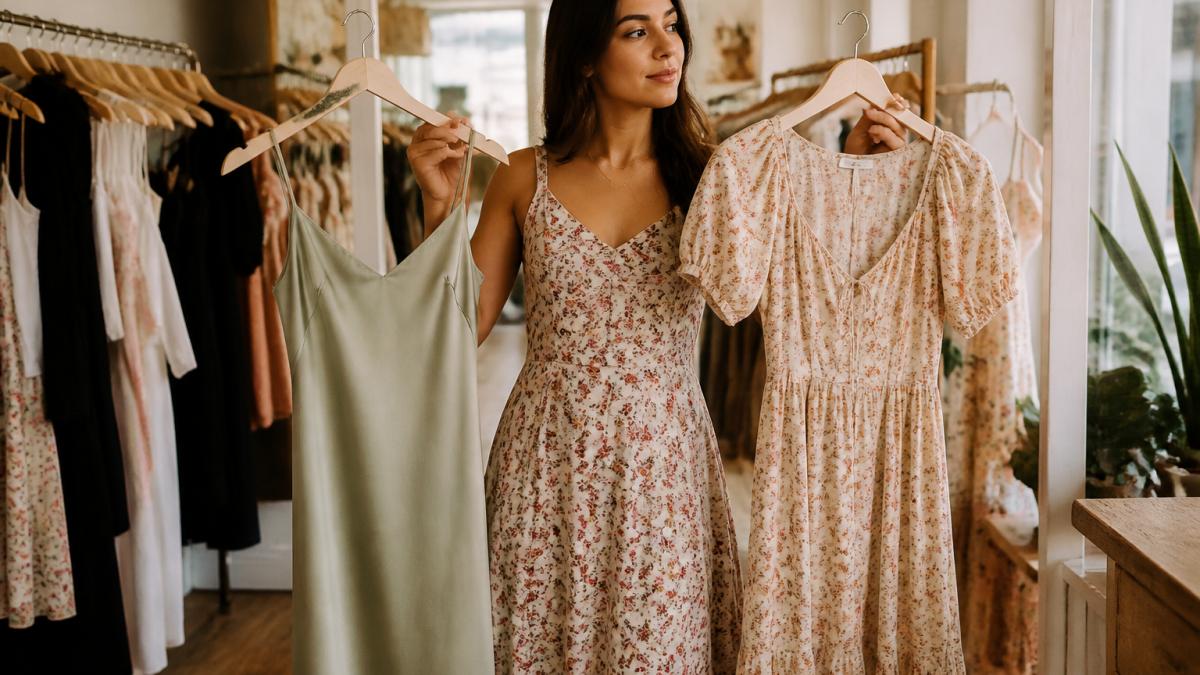
Here is how the two labels stack up across the categories that matter most:
| Category | Reformation | Anthropologie |
|---|---|---|
| Everyday wear | Fitted tees, simple midis, easy knits | Printed blouses, relaxed dresses, layered looks |
| Occasionwear | Sleek slip and satin dresses | Embellished, ruffled, textured dresses |
| Print and pattern | Small florals, gingham, subtle dots | Bold florals, mixed prints, embroidery |
| Silhouette | Body-skimming, clean, minimal | Flowing, tiered, vintage-inspired |
| Neckline | Square, straight, sweetheart | V-neck, smocked, high neck, off-shoulder |
| Best for | Minimal, timeless wardrobes | Romantic, expressive wardrobes |
Fabric matters here too. Reformation tends toward lighter, fluid materials that drape close to the body. Anthropologie tends toward textured and structured materials that hold shape and volume.
For a wedding guest dress, the split is obvious. Reformation gives you a clean, elegant column. Anthropologie gives you a floral, tiered midi that photographs beautifully. Both work. Pick the one that matches the dress code, not the one that matches your feed.
Reformation Dress Quality: What to Expect from Fabric to Finish
Reformation dress quality is best described as deliberate but not luxurious. The brand prioritizes cut and fit over heavy fabric weight, which means dresses feel light and move well but may not have the heft of an investment piece.
Where Reformation shines is construction consistency. Seams sit flat, linings are common on lighter fabrics, and the fit is predictable across styles. Where it can disappoint is longevity in delicate fabrics: thin viscose and lightweight blends need careful washing and storage.
Anthropologie quality varies more by line. Some pieces are beautifully finished with real embroidery and substantial fabric. Others are trend-led and lighter weight. That variance is the trade-off for the brand's enormous range.
Reformation Sizing Guide: How to Get the Right Fit Online
A Reformation sizing guide starts with one rule: measure yourself, then check the specific product's size chart. Reformation sizing runs close to standard US sizing but cuts slim through the waist and bust on many styles, so the same label size can feel different depending on whether a dress is described as fitted, relaxed or true to size.
Three practical steps:
- Measure bust, waist and hip with a soft tape, standing relaxed and wearing the undergarments you would wear with the dress.
- Compare against the size chart on the exact product page, not the general guide, because charts can shift between styles and fabrications.
- Read the fit notes and model measurements: 'fitted,' 'relaxed' and 'true to size' mean different things per style, and a model's height and size give you a real-world reference point.
Anthropologie sizing is broader and less predictable. The brand carries multiple in-house lines, and sizing shifts between them, so a size small in one line can fit like a medium in another. That variance is the trade-off for the brand's enormous range, and it means the product page for the specific line matters more than any brand-wide chart.
For both retailers, check the return window before ordering multiple sizes. Ordering two sizes and returning one is a sensible strategy for occasionwear, provided you confirm the policy first and understand whether return shipping is free or deducted.
Fit confidence is where the two brands differ most in practice. Reformation rewards shoppers who know their measurements and read fit notes, because its cuts are consistent but slim. Anthropologie rewards shoppers who read reviews and check line-specific sizing, because its range is wider and less uniform. Neither approach is better, but they require different habits.
Price and Value: Where Your Money Goes
Price and value work differently at each label, and the difference is easier to see when you compare like for like rather than brand-wide averages. Reformation generally sits in the contemporary bracket: its dresses are positioned as accessible designer pieces, with most styles clustering in a mid-contemporary band and a smaller number of occasion or special-fabric pieces sitting above that.
Where your money actually goes is the more useful question. At Reformation, you pay for cut, fit consistency and a coherent design language. The brand's value proposition is that a simple midi or slip dress will fit predictably, layer easily and look intentional with minimal styling.
Value for money ultimately depends on wear count, not on the label. A simple Reformation midi worn weekly delivers more value than a heavily embellished Anthropologie dress worn twice, even if the Reformation piece cost more up front. The reverse is true if the embellished piece is the one you reach for at every event.
Neither brand is the cheapest route to a feminine dress, and neither is positioned as a budget option. If budget is the priority, the alternatives below matter more than the brand name on the tag.
Beyond the Two: Best Anthropologie Alternatives for Dresses
The best Anthropologie alternatives for dresses fall into three groups: romantic boutique labels, direct-to-consumer contemporary brands, and curated edits that blend both aesthetics. Each offers a different balance of print, fit and price.
If you love Anthropologie's romantic, vintage-inspired mood but want something more curated, a hand-selected runway edit is worth exploring. At Strawberry Flowers, our curated NYFW runway edit brings together expressive, feminine pieces with statement-making detail, alongside our signature footwear.
If you love Reformation's clean lines but want more variety, contemporary direct-to-consumer labels are the natural alternative. They tend to offer similar minimal silhouettes with faster trend turnover.
A third route is the boutique approach: smaller labels with tightly edited collections. Fewer options, but stronger point of view.
Sustainability and Ethics: Comparing Claims and Evidence
Sustainability claims deserve scrutiny at both labels. Reformation publishes detailed information about its materials and manufacturing approach, and it has been among the more vocal contemporary brands on environmental reporting. Anthropologie's parent company publishes sustainability disclosures covering its brands.
The practical test is evidence, not messaging. Look for specific material composition, traceability statements and third-party certifications on the product page. Vague language about "conscious" collections tells you very little.
A useful habit: check whether a brand publishes progress against its own targets, not just ambitions. Published targets without updates are marketing. Published updates with numbers are accountability.
For shoppers who care about responsible fashion, the strongest signal remains the same across every label: buy fewer, better pieces and wear them for years. That beats any certification badge.
Which Brand Fits Your Wardrobe? A Decision Framework
Choosing between the two comes down to four questions. Answer them honestly and the decision makes itself.
- What is your dominant silhouette? Fitted and clean points to Reformation. Flowing and layered points to Anthropologie.
- What do you need the dress for? Sleek occasionwear favors Reformation. Statement events favor Anthropologie.
- How much variety do you want? A tight, consistent wardrobe favors Reformation. A treasure-hunt wardrobe favors Anthropologie.
- What is your wear count likely to be? High wear count favors simple, versatile pieces. Low wear count favors the distinctive piece.
If you land on "romantic, expressive and curated" as your answer, that is exactly the space Strawberry Flowers occupies. Our signature footwear and runway edit are built for women who want feminine, statement-making style.
Frequently Asked Questions
Is Reformation part of Anthropologie?
No, Reformation and Anthropologie are separate, independent companies. Reformation is a Los Angeles-based brand known for its minimalist, sustainable approach to fashion, while Anthropologie is a subsidiary of URBN (Urban Outfitters, Inc.) with a more eclectic, bohemian aesthetic. They operate as distinct retailers with their own design teams, supply chains, and store experiences. Neither owns the other, and their styles reflect different fashion philosophies, so you can shop both without overlap in ownership.
Which brand has more occasion dresses, Reformation or Anthropologie?
Anthropologie generally offers a broader range of occasion dresses, including wedding guest, cocktail, and formal styles, often with more embellishment and volume. Reformation focuses on sleek, minimalist occasionwear with clean lines and sustainable fabrics. For a wedding or a formal event, Anthropologie provides more variety in silhouettes and detailing, while Reformation excels at understated, modern elegance. Your choice depends on whether you prefer bohemian flair or pared-back sophistication.
How does Reformation's sizing compare to Anthropologie's?
Reformation's sizing tends to run slightly smaller and more fitted than Anthropologie's, which often offers a more relaxed, generous cut. Reformation provides a detailed size guide with garment measurements, and many customers size up for a less body-con fit. Anthropologie's sizing is more consistent with standard US sizes but varies by brand within the store. Always check the specific item's measurements and customer reviews for the most accurate fit before ordering online.
Are Reformation dresses worth the price?
Reformation dresses' value lies in sustainable materials, ethical production, and timeless designs that transcend trends. If you prioritize eco-conscious fashion and minimalist aesthetics, the investment can be justified. However, some customers note that the quality of certain fabrics may not match the price point. For special occasions or versatile everyday pieces, many find them worth it, but always review the fabric composition and care instructions before buying.
The hardest part of shopping online is not finding a beautiful dress. It is knowing it will fit, last and actually get worn. At Strawberry Flowers, we design signature footwear and curate a NYFW runway edit for women who want romantic, feminine pieces with real presence. Explore the collection, check the sizing guidance before you order, and step into a wardrobe that helps you walk like you love yourself. [SHOP THE RUNWAY EDIT]