

Last Updated: November 3, 2026
Quick Summary
Runway fashion is clothing designed as a creative statement and produced in limited quantities, while mass-produced clothing is designed for volume sales and made in large factory runs. The difference shows up in fabric, construction, fit and how long the piece survives, and you can check it by turning the garment inside out.
- Runway samples use fabric chosen for movement under lights and are cut to one model's proportions.
- Check six things: fabric composition, seam finish, stitching density, pattern alignment, hardware and lining.
- Pattern matching is often skipped at side seams on mass-produced pieces to save fabric.
- Cost per wear matters more than the tag price when comparing the two.
- Ask who made a garment and where before trusting an ethical fashion label.
Table of Contents
- Runway Fashion vs Mass-Produced Clothing: The Core Differences
- Ready-to-Wear vs Haute Couture: Where the Runway Actually Sits
- Runway Fashion vs Fast Fashion: What You Pay For and What You Keep
- How to Tell If Clothes Are Good Quality: A Six-Point Check
- Total Cost and Value: Why the Cheaper Garment Often Costs More
- Ethical Fashion Brands: What to Ask Before You Trust the Label
- Durability, Inclusive Sizing and Returns: The Tests Competitors Skip
- Shop the Runway Edit at Strawberry Flowers
- Frequently Asked Questions
Runway Fashion vs Mass-Produced Clothing: The Core Differences
Runway fashion is clothing designed as a creative statement and produced in limited quantities, while mass-produced clothing is designed for volume sales and made in large factory runs. The gap shows up in fabric, construction, fit and how long the piece survives. If you are wondering whether runway-inspired pieces are worth shopping for, that question is answered next. This Strawberry Flowers guide walks through the differences so you can judge what you are actually buying.
The label tells you less than the inside of the garment does. A designer name does not guarantee a strong seam, and a lower price does not automatically mean poor cloth. What separates the two is a set of physical details you can check in under a minute.
Why the Runway Piece and the Shop Floor Piece Are Not the Same Garment
A runway piece is a sample built to be photographed and remembered. A shop floor piece is built to be replicated thousands of times at a consistent cost. Those two goals pull design in opposite directions.
The runway sample often uses a fabric chosen for how it moves under lights, cut in a silhouette that flatters a single model's proportions. When a house sells a version of that look, the pattern gets graded across sizes, the cloth gets swapped for something that can be cut in bulk, and trims simplify. The result can still be beautiful. It is simply a different garment wearing the same idea.
Vogue's explanation of how couture and ready-to-wear differ is a useful primer on that translation process. Understanding it stops you from expecting a retail piece to drape exactly like the runway original.
Ready-to-Wear vs Haute Couture: Where the Runway Actually Sits
Ready-to-wear is factory-produced clothing sold in standard sizes, while haute couture is made to a client's measurements by hand in very small numbers. Most of what appears on a runway is ready-to-wear: designed in advance, produced in seasonal runs, sold through stores and online.
Haute couture sits at the far end: fitted to one person, sewn by hand, and priced accordingly. Between those poles sits a wide middle ground of small-batch production, where a designer makes limited pieces with closer attention to finishing.
That middle ground is where most shoppers actually live. If you want to see how runway ideas get translated into pieces you can wear on a normal Tuesday, our guide to runway inspired apparel for everyday wear breaks down the categories that work hardest in a real wardrobe.
Runway Fashion vs Fast Fashion: What You Pay For and What You Keep
Runway fashion vs fast fashion comes down to what happens after the trend cycle moves on. Fast fashion turns a look around quickly at a low price, while runway-led pieces take longer to develop and are built to stay in rotation.
How to Tell If Clothes Are Good Quality: A Six-Point Check
Good quality clothing shows in six places: fabric composition, seam finish, stitching density, pattern alignment, hardware and lining. Check those six and you will know more than the price tag tells you.
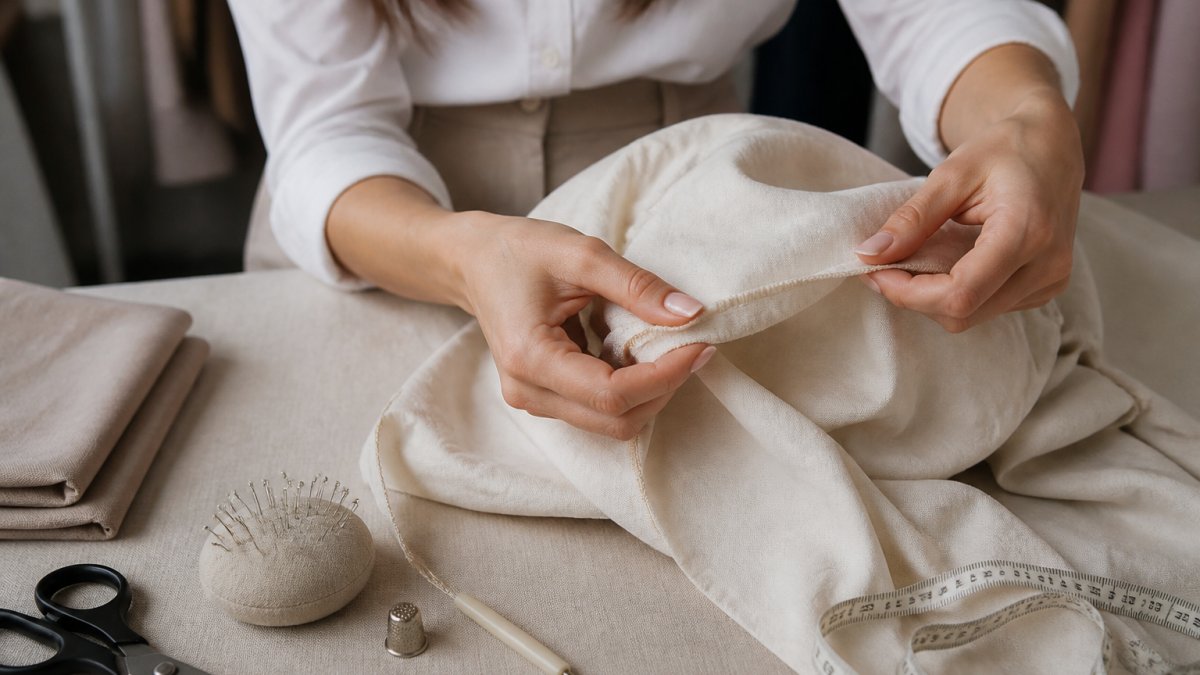
Run through this checklist before you commit:
- Fabric composition: read the fibre list, not the marketing name. A higher natural-fibre content can signal better drape and breathability.
- Seam finish: turn the piece inside out. Overlocked edges are fine on casual wear; French or bound seams signal care. On a mass-produced garment, the overlock stitch is often the first thing to fray after repeated washing, especially at the side seam and armhole.
- Stitching density: tight, even stitches with no loose threads or puckering along the seam line. A denser stitch count per inch correlates with a stronger seam, but the more reliable test is consistency: run your finger along the seam and feel for skipped stitches, bunched thread or a wavy hem.
- Pattern alignment: checks, stripes and prints should meet at the seams, not jump. On a mass-produced piece, pattern matching is often skipped at the side seam and centre back to save fabric; on a considered piece, the check should continue across the seam line.
- Hardware: zips should run smoothly, buttons should feel solid, and buttonholes should be cleanly cut. A metal zip with a smooth pull and a cleanly bound buttonhole usually outlasts a plastic zip that catches or a buttonhole with loose threads that unravel after a few wears.
- Lining and interfacing: a lined jacket holds its shape; a cheap one collapses at the shoulder. Check whether the lining is attached with a generous seam allowance and whether the interfacing at the collar and lapel feels stiff or fused; fused interfacing can bubble after dry cleaning, while a sewn-in canvas holds its shape longer.
Seams, Stitching and Fabric Composition
Fabric composition is one of the most useful details on the label. Look closely at the hem and the armhole, where uneven topstitching or skipped stitches are easiest to spot.
Watch out: a high price tag does not guarantee a French seam or a clean finish. Always turn the garment inside out before you decide, because the outside can look identical on a well-made and a poorly made piece.
Fit, Silhouette and How a Garment Sits on the Body
Fit can vary considerably between brands, so the same size may pull across the back in one and hang loose in another. Compare the shoulder-to-shoulder measurement and the sleeve length against a garment you already own and like, rather than relying on the size label alone.
Check the size chart against your own measurements rather than the size you "usually" wear. If you are ordering online and want to avoid the return cycle, our guide to avoiding online fashion sizing returns covers how to measure and what to ask before checkout.
Total Cost and Value: Why the Cheaper Garment Often Costs More
Cost per wear is the number that matters, not the price on the tag. A piece you wear thirty times at a higher price can cost less per outing than a cheap item that loses its shape after four washes.
Do the arithmetic before you buy:
| Factor | Mass-produced piece | Runway-led piece |
|---|---|---|
| Entry price | Lower | Higher |
| Expected wears | Few | Many |
| Replacement cycle | Frequent | Rare |
| Resale or keep value | Minimal | Often retained |
| Cost per wear over time | Rises with each replacement | Falls with each wear |
The calculation is not an argument for spending more on everything. It is an argument for spending more where you will wear the piece hardest: outerwear, knitwear, footwear and the dress you reach for repeatedly.
Ethical Fashion Brands: What to Ask Before You Trust the Label
Ethical fashion brands are those that can tell you where and how a garment was made, and back it up with specifics rather than adjectives. "Sustainable" and "conscious" are marketing words with no fixed legal meaning in most markets, so the label alone proves nothing.
Ask four questions:
- Who made this, and where? A named factory or region is a better sign than a vague country reference.
- What is the fibre, and is it certified? Look for recognised third-party certification rather than a house logo.
- Is production small-batch or scaled? Limited runs usually mean closer oversight.
- What is the return and repair policy? A brand confident in its construction tends to stand behind it.
For a deeper look at how production standards connect to what you actually feel in the fabric, see our comparison of ethical fashion vs fast fashion quality.
Durability, Inclusive Sizing and Returns: The Tests Competitors Skip
Durability, size range and return terms are the three things most reviews skip, and they are the three that decide whether a purchase was worth it. Most runway-versus-mass-produced comparisons describe how a garment feels on day one but not how it performs after five washes, how it fits a range of body shapes, or what happens if it does not work out.
Durability is best judged after several washes, not on the hanger. Wash a new piece inside out on a cool cycle and check the seams afterwards; that tells you more than any product description.
Inclusive sizing is worth checking closely. Look for garment measurements such as shoulder-to-shoulder, sleeve length, rise and inseam, because those tell you how the piece will sit on your frame. When a size chart lists only a few measurements, treat the fit as a guess.
Returns are part of the value. Read the window, the condition requirement and who pays postage before you order. A generous returns policy is often a sign the brand expects the fit to work.
Comparing pieces on durability evidence, measurement transparency and return policy is more useful than judging on the label alone.
Shop the Runway Edit at Strawberry Flowers
Telling a well-made garment from a mass-produced one comes down to the details you can see and feel: the fibre, the seam, the fit across the shoulder, and whether the piece still looks right after a season of wear.
At Strawberry Flowers, our signature footwear and hand-selected runway pieces reflect a romantic, feminine point of view and statement-making detail. Our curated runway edit offers limited-quantity pieces for women who want to dress with confidence.
If you have been comparing the same few established names and wondering what a smaller house offers, start with the pieces themselves. Shop the runway edit and explore the collection for yourself.
Strawberry Flowers is a romantic fashion house with signature footwear designed for bold, unapologetic wear and a curated runway edit of limited-quantity apparel that carries our expressive, feminine spirit.
Frequently Asked Questions
What is the difference between runway fashion and mass-produced clothing?
Runway fashion is designed as a statement piece, often made in small quantities with considered fabric choices and construction, then adapted into a commercial collection. Mass-produced clothing is made in large runs to a lower cost target, which usually means simpler construction, lighter fabrics and less hand-finishing. The visible difference shows up in seams, fabric weight, lining and how the garment holds its shape after repeated wear and washing.
Is runway fashion better quality than mass-produced clothing?
Not automatically. A runway look can still be poorly made if it is produced cheaply for a diffusion line. Judge the garment itself: check whether seams are clean and flat, whether patterns match at the join, whether the fabric has weight and recovery, and whether the lining is attached properly. Runway fashion tends to have more hand-finishing and better fabric composition, but the six-point quality check matters more than the label.
Can mass-produced clothing be ethical and high quality?
Yes. Ethical fashion brands can work at scale when they publish supplier information, use certified materials such as recycled cashmere or organic cotton, and keep production runs controlled. Ask for fabric composition, where the piece was made, and whether the brand offers repairs or a clear returns policy. High quality at volume is possible; what is rarely possible is high quality at the lowest price on the market.
How do I know a runway-inspired piece will fit and last before I buy online?
Start with the size chart and measurements rather than the label size, and compare them to a garment you already own and love. Check the fabric composition for stretch and weight, read the returns policy before ordering, and look for adjustable details such as straps or shoulder ties that let you tailor the fit. For footwear, confirm width guidance and whether the style runs true to size.
