

Last Updated: October 25, 2026
Quick Summary
Avoiding sizing returns starts with measuring your body once, then matching those numbers to each retailer's own size chart rather than a generic conversion table. Confirm the fit with garment measurements and review feedback, and check the return policy before you check out.
- Measure over light clothing with the tape level and snug, not tight, and re-measure every six months.
- Body measurements describe the body a garment fits; garment measurements describe the finished piece laid flat.
- Trust garment measurements for the final call when a retailer offers both types of chart.
- Middle reviews are valuable because three-star shoppers usually flag a fit surprise.
- Rigid denim and non-stretch tailoring: size up; stretch knits and jersey: size down for a close fit.
Table of Contents
- Why Online Fashion Sizing Returns Happen and What They Cost
- How to Measure Yourself for Online Clothing in Six Steps
- Your Online Clothing Size Chart Guide: Body vs Garment Measurements
- How to Read Clothing Reviews for Fit Before You Buy
- What to Do If Between Clothing Sizes: A Decision Tree
- Fit Differences by Garment Type, Fabric and Brand Sizing
- Build Your Return-Prevention Checklist Before You Check Out
- Shop the Runway Edit With Confidence in Your Size
- Frequently Asked Questions
Why Online Fashion Sizing Returns Happen and What They Cost
The single biggest reason online fashion orders come back is not damaged goods or late delivery. It is fit.
Most shoppers treat a size label as a fixed truth. It is not.
The cost is real on both sides.
Below, we cover a six-step measuring method, how to read size charts, how to mine reviews for fit feedback, and a pre-checkout checklist.
How to Measure Yourself for Online Clothing in Six Steps
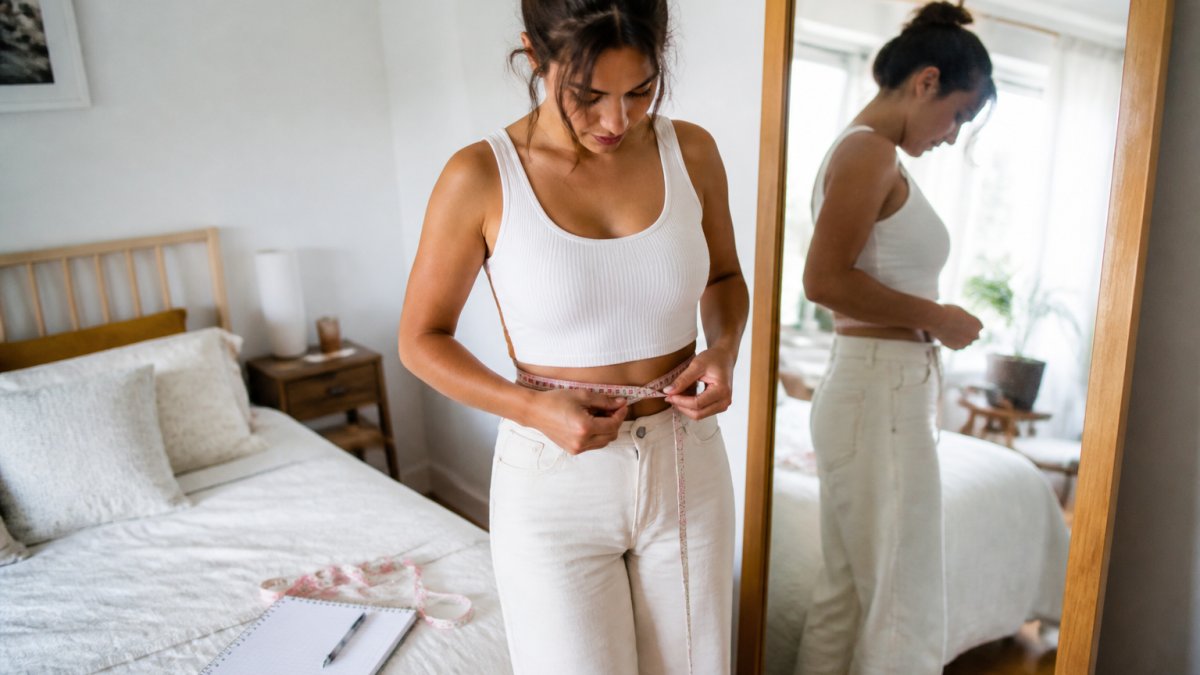
Getting accurate body measurements takes about ten minutes and one soft tape. Do it once, write the numbers down, and you have a reference you will use for years.
- Measure over light clothing or underwear. Bulky layers add phantom centimetres and push you into the wrong size.
- Keep the tape level and snug, not tight. You should be able to slide one finger under it. A tape pulled tight reads small and leads to a garment that pinches.
- Measure your bust at the fullest point, keeping the tape straight across your back.
- Find your natural waist by bending sideways; the crease that forms is your waistline. Measure there, not at the navel.
- Measure your hips at the fullest point, usually around the seat, feet together.
- Record your inseam and, for heels, your foot length and width. Stand on paper, trace your foot, and measure the outline heel to toe.
Re-measure every six months or after any significant change in body size; a stale set of numbers is worse than none.
Your Online Clothing Size Chart Guide: Body vs Garment Measurements
An online clothing size chart guide only works if you know which numbers it is showing you. Size charts come in two flavours, and mixing them up is one of the most common sizing issues.
Body measurements describe the body the garment is designed to fit.
The difference matters because of ease, the extra room built into a garment beyond the body it fits.
How to actually use a size chart, step by step
- Find the retailer's own chart on the product page, not a generic conversion table. Brand charts reflect that brand's block and grading.
- Identify whether the numbers are body or garment measurements. Look for phrasing like "fits bust" (body) versus "chest width" or "garment measures" (garment).
- If it is a body chart, match your measured bust, waist and hip to the closest band, then check the reviews for whether that brand runs true, small or large.
- If it is a garment chart, measure a similar piece you already own and love, laid flat, and compare like for like. This is the most reliable method because it accounts for the ease you personally prefer.
- Check the stretch. A chart built for a knit with 5% elastane will tolerate a tighter measurement than one built for a woven fabric with no give.
- When both charts are offered, trust the garment measurements for the final call. They tell you how the piece is actually cut.
Why international conversions mislead
A European 38, a UK 10 and a US 6 are not identical across brands, and generic conversion tables round to the nearest equivalent rather than the actual cut. Always convert using that specific retailer's chart. Treat any universal table as a rough starting point, never a final answer.
Watch for vanity sizing and inconsistent grading
Some houses cut generously to flatter, others run slim, and a few change their block between seasons. A "medium" at one label can match a "small" at another. This is why carrying a size across brands is unreliable, start from each brand's own chart and confirm with garment measurements where available. If a chart looks unusually generous or unusually slim compared with your benchmark garment, trust the numbers over the label.
How to Read Clothing Reviews for Fit Before You Buy
Customer reviews are the closest thing to a fitting room you get online, but only if you read them for fit feedback rather than star ratings.
Scan for these signals:
- Sizing language: "true to size," "runs small," "size up," "runs large." Count how many reviewers say the same thing.
- Body context: reviewers who share their height and usual size give you a comparison point.
- Customer photos: real photos show how a garment drapes on a real body, not a model.
What most guides miss is the value of the middle reviews. Shoppers who bothered to write three stars usually did so because something about the fit surprised them. When several reviews mention the same fit issue, treat it as a pattern, not an outlier.
What to Do If Between Clothing Sizes: A Decision Tree
Being between sizes is normal, and the right call depends on the garment, not on a rule of thumb.
Step 1: Check the fabric. If the fabric has stretch, size down for a closer fit or stay true for comfort.
Step 2: Check the intended fit. A relaxed or oversized cut gives you room to size down.
Step 3: Check the reviews. If reviewers consistently say a piece runs small, follow them.
Step 4: Check the return and exchange policy. If exchanges are free and easy, ordering two sizes and returning one, known as bracketing, is a reasonable hedge. If returns cost you money, choose carefully the first time.
| Situation | Choose | Why |
|---|---|---|
| Stretch fabric, close fit wanted | Size down | Fabric gives where you need it |
| No stretch, tailored cut | Size up | No margin for error |
| Reviews say "runs small" | Size up | Pattern beats the label |
| Free exchanges, high-stakes piece | Bracket two sizes | Hedge with low risk |
| Structured heels, wide feet | Size for width first | Length is easier to adjust than width |
Fit Differences by Garment Type, Fabric and Brand Sizing
Fit is not one number. It changes with the garment type, the fabric and the house that made it. Here is how to adjust your sizing decision by category.
Denim and trousers
Denim is the category where sizing returns cluster. Rigid 100% cotton denim has almost no give and will feel tight at first, then relax about half a size with wear. Stretch denim with 1-2% elastane moves with you and can be sized down for a closer fit. Check the rise too: high-rise sits at your natural waist, low-rise at the hip.
Dresses
A fitted or bodycon dress leaves no margin, so size to your largest measurement (usually bust or hip) and check reviews for whether the fabric gives. A relaxed or A-line dress is more forgiving and can often be sized down. Bias-cut dresses drape on the diagonal and flatter a range of bodies but can cling where you least expect, read customer photos for how the fabric falls.
Outerwear and tailoring
Coats, blazers and structured jackets are built with layering ease, so they should fit over a knit or shirt without pulling. Check the shoulder width first: it is the hardest alteration and the clearest sign of a bad fit. If the shoulders sit correctly, the rest can usually be tailored. For non-stretch tailoring, size up.
Knits and jersey
Knits, jersey and anything with elastane move with you and forgive a slightly off size, the safest category to buy online. The trade-off is losing shape over time, so check reviews for sagging or pilling before you commit.
Non-stretch and structured fabrics
Woven fabrics, leather and structured tailoring hold their shape and show every mismatch. Size up when in doubt and confirm with garment measurements. Leather will not stretch much, so fit the widest part of your foot or body first. Readers with wider feet can also read how to find heels that fit wide feet. For a deeper walkthrough, see how to find heels that fit perfectly.
Brand sizing and cross-brand shopping
If you are moving between brands, do not carry a size across; start from that brand's own chart and confirm with garment measurements. For a side-by-side look, see the Reformation vs Anthropologie style comparison guide. Keep a note of your size in the three or four brands you buy most, since those are where you have real fit history.
Build Your Return-Prevention Checklist Before You Check Out
Run this checklist every time you buy a fitted or high-value piece. Pair it with guidance on how to build a confident capsule wardrobe. It takes two minutes and prevents most sizing returns.
- I have my current body measurements written down
- I checked the retailer's own size chart, not a generic conversion table
- I compared garment measurements against my body measurements where available
Shop the Runway Edit With Confidence in Your Size
Sizing confidence changes how you shop. When you know your measurements, how to read a chart and how to mine reviews, a statement piece stops being a gamble and becomes a decision.
At Strawberry Flowers, our signature footwear and curated runway edit are designed for women who want to walk boldly and unapologetically. If you are ready to shop with your measurements in hand, browse our runway-inspired pieces to wear every day and find the size that fits the woman you are.
Frequently Asked Questions
How can I choose the right clothing size when shopping online?
Start with your own body measurements, not the size you wear in one favourite brand. Take bust, waist, hip, inseam and foot length with a soft tape, then match those numbers to the specific size chart on the product page. Check whether the chart lists body measurements or garment measurements, read the fit notes and fabric stretch, and scan reviews from shoppers with a similar shape. If you sit between two sizes, the decision tree in this guide shows which way to go for woven versus stretch fabrics.
How do I measure myself for online clothing without help?
Wear light clothing or underwear, stand relaxed and keep the tape level and snug but not tight. Measure your bust at the fullest point, your natural waist at the narrowest point, your hips at the widest point, and your inseam from crotch to ankle. For shoes, trace your foot on paper and measure heel to longest toe in centimetres, then add a little room for toe swell. Write everything down once and keep it in your phone so every future order starts from the same numbers.
Should I check a brand's size chart before ordering?
Yes, every time, because sizing returns often come from assuming a size carries over between brands. An online clothing size chart guide only helps if you read the chart on that exact product page: some brands list body measurements, others list garment measurements, and vanity sizing means a medium in one label can match a large in another. Compare your numbers to the chart, note the intended fit (fitted, relaxed, oversized) and check the exchange policy before you pay.
How can customer reviews help me find the right fit?
Reviews are the closest thing to trying a garment on. Search for comments on fit, fabric stretch and whether the item runs small or large, and look for reviewers who share your height, build or usual size. Customer photos show how a piece drapes on a real body rather than a model. When several reviewers say the same thing, for example that the waist runs narrow, treat it as a pattern and size accordingly or ask customer support before ordering.
What should I look for in clothing product photos and descriptions?
Read the product description for fabric composition, stretch percentage, lining and the stated intended fit, then study photos for how the garment sits on the model, where hems fall and how much ease the fabric has. Look for close-ups of seams and fastenings, which hint at construction quality. If the description is vague about fit, that is a signal to check the size chart, read reviews or contact customer support before you commit to a purchase.
How do fabric type and stretch affect clothing fit?
Woven fabrics such as linen, structured cotton and silk have little give, so they show every sizing error and are the riskiest to buy without accurate measurements. Knits, jersey and anything with elastane stretch to your shape and forgive a small misjudgement. Garment construction matters too: bias cuts and adjustable waists are more forgiving, while tailored shoulders and fixed waistbands are not. When a piece has no stretch, size to your larger measurement and plan for alterations if needed.
What should I do if I am between sizes when shopping online?
Use the larger size when the fabric has no stretch, the fit is described as slim, or the item has a fixed waistband or tailored shoulders, then budget for a small alteration. Use the smaller size when the fabric stretches, the cut is relaxed or the brand notes the piece runs large. Check the return and exchange policy first, and if you are still unsure, ask customer support with your measurements in hand. That one message often prevents a sizing return entirely.
The gap between a wardrobe you love and a pile of returns is usually a tape measure and ten minutes. Strawberry Flowers designs statement footwear and a curated runway edit for women who want to express confidence in every step, with a romantic aesthetic and limited-quantity pieces you will not find everywhere. Get started with Strawberry Flowers and shop the runway edit in your true size.
